
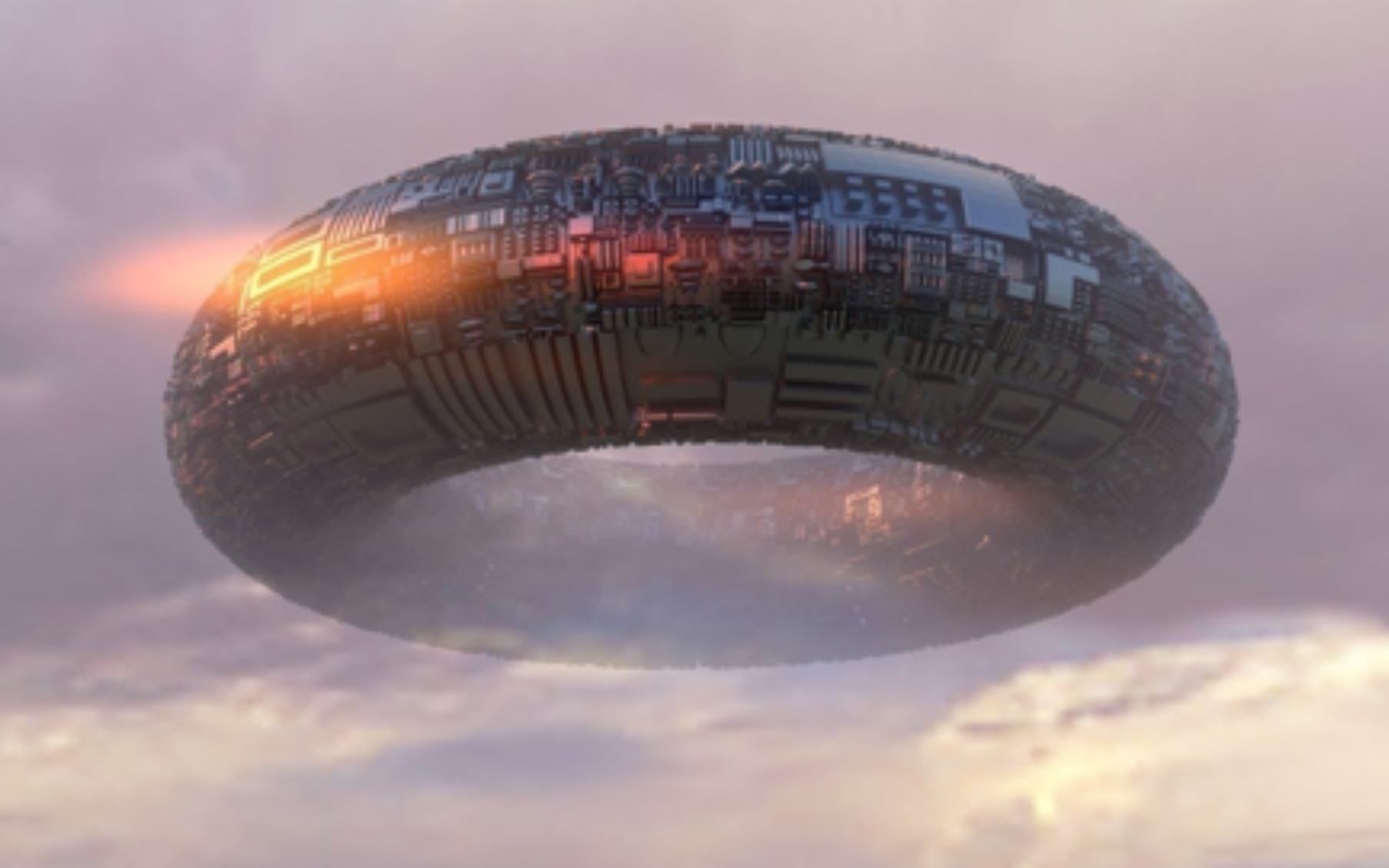
Today, a lot of attention is paid to various space programs: from the delivery of cargo into orbit around the Earth, to manned flights to Mars
Big amount of options for spacecraft boosters that are offered for this purpose:
- Rocket launch from an airplane – It allows to reduce air resistance, to get some initial speed and some initial height of the start at the expense of a third-party carrier (aircraft)
- Shot by a space drone from a huge gun with a barrel length of about 1 km – Allows you to give the device some initial speed with the help of a cannon. The possibility of cheaper delivery of goods into orbit around the Earth. Here the developers do not pay attention to some negative points that make such projects useless
- A spaceship – Allows you to fly in space in any direction for as long as you want, and maneuver without throwing off your own mass. The device has minimal dimensions and a huge sail. Great difficulties with maneuvering in space. Very little acceleration, flight braking and low flight speed
- Launch of a chemical multi-stage rocket from Earth (traditional method) – When flying to Mars, from Mars to Earth, it will be able to return 0.1% of the mass at best. At the same time, the flight to Mars will take at least 6 months, and returning to Earth will take about 2 years. There is practically no possibility of maneuvering in space due to the extremely limited supply of fuel
- A spacecraft with a plasma, nuclear or photon engine – The same as previous point, but only slightly more effective and expensive many times more. And it can be implemented after many tens of years
All these projects are extremely inefficient. In addition, they all represent ship designs with very low mechanical strength and radiation protection systems. For the exploration and development of the Solar System, or at least only Mars, fundamentally new engines for space vehicles are needed, and these engines must work not on the principle of throwing the mass of the ship, but on other principles. For example, on the interaction of force fields!
We offer a package of our own latest technologies in this direction, which are capable of radically changing approaches to the development of the Solar System
Taking into account the use of new technologies in the field of propulsion systems, we can design and manufacture an interplanetary spacecraft weighing from several hundred to hundreds of thousands of tons. A ship can be designed with “earthly” comforts for the life of its crew, and its structure can have great strength and a system of protection against radiation and meteorites.

Such a spacecraft will be able to develop optimal long-term acceleration within 0.2g, and maximum acceleration during takeoff and landing up to 0.5g, which will allow it to land on all planets of the Solar System and their satellites, as well as take off from them. Launch from the Earth and landing on the Earth can be reported by the launch platform, which works on the same principle. Such a platform will be able to serve as a means of delivering goods weighing a thousand tons into orbit to any solar planet.
Theoretically, such a launch platform can be combined with a ship and its flight characteristics will increase significantly.
The specified acceleration will allow a ship to develop a speed up to 300 km/s in the sector inside the asteroid belt and more than 3000 km/s in the outer region, beyond the asteroid belt. A similar speed will allow the ship to reach Mars in 7-10 days, Jupiter in 2-3 weeks, and Pluto in 1.5-2 months. In space, it will be able to fly along any trajectory, regardless of the gravitational fields of the Sun and planets.

The engines of the ship work without using the principle of mass rejection.
It means the ship, when starting from Earth, will have a mass of 1000 tons, let’s say, will fly to Mars with a landing on the planet, will spend 2 weeks on Mars and a month after starting from Earth will return to Earth in the same way as it started from it and with a mass of 1000 tons.
The two main problems that prevent such a ship from being built today are the engine and the ship’s power unit. The offered packages of our technologies allow you to solve both of these problems.